SEA Energy Trust Net Zero Emerging Leaders Internship (NZELI)
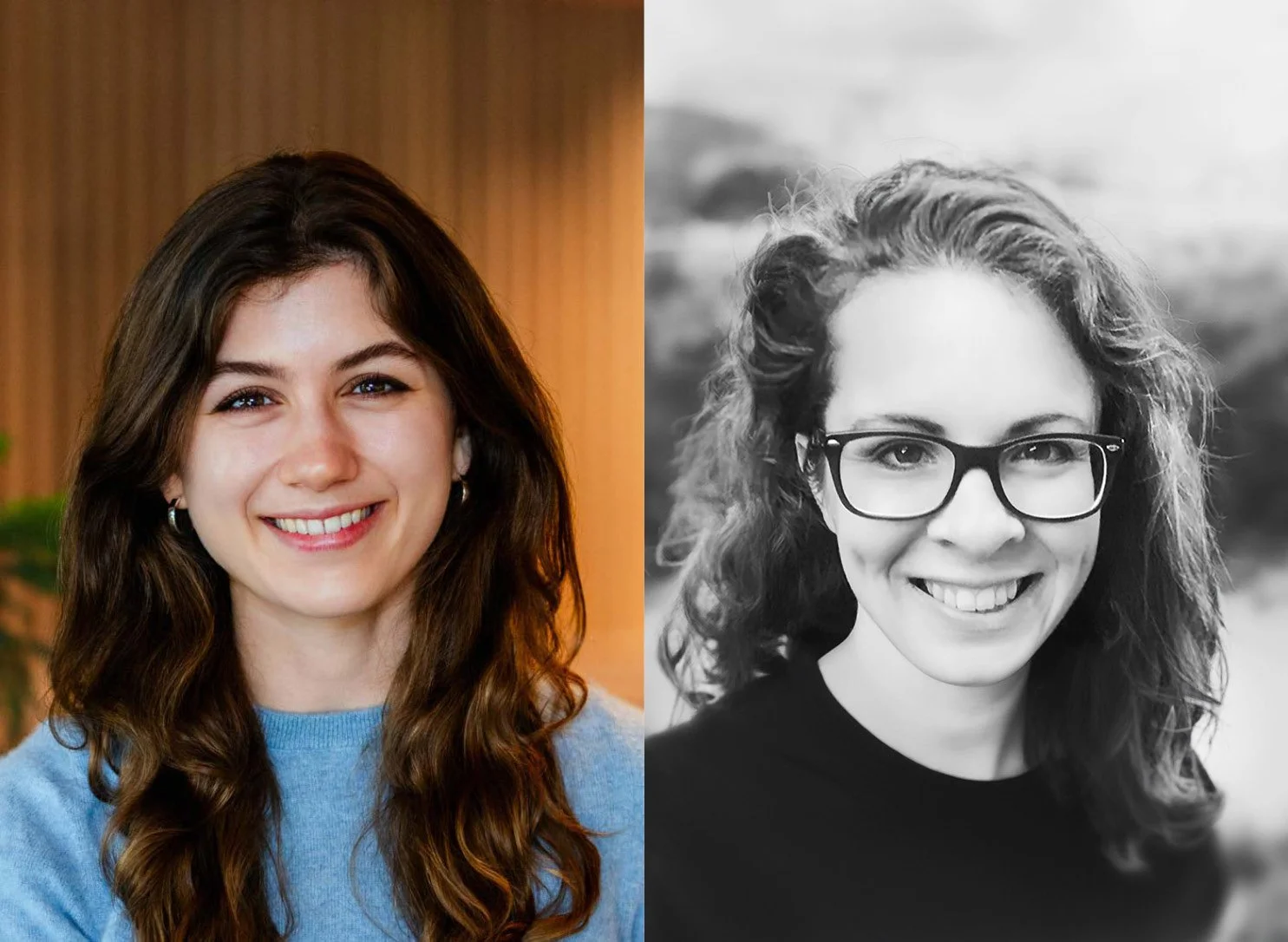
SEA has been privileged to receive the Net Zero Emerging Leaders Internship (NZELI) through Energy Trust of Oregon twice. This internship has been pivotal in driving our AIA 2030 Commitment forward. Each of our interns have brought new skills and passion into our office helping educate and inspire staff to improve our sustainable design process and the performance of our projects. To get to know more about the talented women behind this internship, we interviewed each:
Melanie Guyer: 2023 NZELI
Can you tell me about your area of focus at University of Oregon?
I’m a Masters of Architecture student specializing in interiors. I became interested in sustainability while taking a studio focused on passive design.
What led you to pursue this path?
In college, I majored in linguistics and then took a break before going back to school. During my break, I did the hands-on work of renovating the houses we owned. This had a profound impact on me and my family. Most importantly, it inspired me to want to pursue design and construction professionally and at a larger scale.
For me, there is no other option than sustainability. Having kids, I think about the future they will inherit and want to make it better. Designing my family’s homes taught me about creative ways to reuse and apply materials. We always had to think outside the box to keep our projects within budget, and we also prioritized ways to avoid contributing to landfills.
What drew you to the Energy Trust internship?
I had just completed my first two terms in architecture school when I saw the posting. I was excited to do something more analytical and data-driven like using analysis tools to understand building performance. Through tools like energy modeling, we can iterate different performance options to determine the best strategies for improving design.
Can you share more about the work you’ve been doing at SEA?
During my first year as a NZELI, my focus was on logging projects in the AIA DDX, learning the energy modeling software Covetool, and performing operational energy analysis. Scott Edwards hired me for two additional winter internships and I continued the work I started, but also began to focus on tracking embodied carbon through life cycle analyses.
Is there anything that has surprised you during your internship at SEA?
It’s surprising how easy and fast the tools are to use, especially carbon calculators like CAREtool and C.Scale. Despite this, some firms are not using them. Reasons for this may be that firms are unable to easily find these tools or more marketing is needed to improve adoption. Most of these tools are free because their developers are often architects with a deep desire for architecture to be more sustainable.
What has been your favorite part of your internship?
My favorite part of this internship has been getting to know everyone at the firm, particularly Juliette who has been an incredible mentor as well as trusting, available, and helpful with my job search. While I mainly worked remotely from school in Eugene, I enjoyed coming to the office a few times.
Can you tell me what you’re most excited about in sustainable design/sustainability?
I’m really excited about more focus in industry being placed on deconstructable buildings and thinking of buildings as materials. I’d like to see more of a cycle of reuse instead of a one-time use.
What’s next?
I joined Mithun in the fall of 2025 in Seattle as an Architectural Designer.
Charlotte Kamman: 2026 NZELI
Can you tell me about your area of focus at University of Oregon?
I received my Bachelors of Architecture from the University of Oregon in June, 2025. I spent 4 years based out of the Eugene campus and completed my 5th and final year from the Portland campus. I focused on issues of sustainability, which I am very passionate about, whenever I was able to. First, I focused on passive design strategies, building science, and sustainable mechanical systems. I earned my Certified Passive House Consultant certification from Phius in 2023, and I was an active member of the leadership team for the University of Oregon’s ASHRAE student chapter. Later, my focus transitioned to low-carbon materials. I became a student researcher with the Institute for Health in the Built Environment. In that role I developed and studied bio-based (mycelium-based composite) acoustic isolation materials for mass timber floor-ceiling assemblies. This focus inspired my research on bio-based materials for a travel fellowship during the summer of 2024, and I used this research for my UO Clark Honors College thesis, which I defended in spring of 2025.
What led you to pursue this path?
My parents are environmentalists, and I grew up valuing the natural environment and sustainability from a very young age. My interest in architecture was actually sparked by my interest in sustainability, when I read the book Cradle to Cradle in high school. I admire design thinking for its inherent optimism and think it is a fantastic lens to use to try to solve problems of sustainability and the climate crisis.
What drew you to the Energy Trust internship?
Coming out of school, I was very interested in the opportunity this internship provided to learn more about how sustainability is addressed in the professional environment. I was also really excited about the opportunity to work with and synthesize data, which allowed me to practice and apply some of the skills I learned in academic research. I was also looking forward to the opportunity to do some analytical modeling and practice data-informed design.
Can you share more about the work you’ve been doing at SEA?
At SEA, my primary task was to manage and report on the 2030 Commitment logging process. I collected and analyzed data for the 2025 calendar year and logged the projects for 2025 in the AIA DDx. I also refurbished the Smartsheet reporting dashboard and prepared a 2030 update presentation.
I also contributed to an effort to log SEA’s portfolio of current projects for embodied carbon in C.Scale. I met with staff from different project teams to gather information for this effort and teach those staff members how to use C.Scale.
Additionally, I completed a daylight analysis study for one of the firm's active projects, using ClimateStudio to help inform shading device design and placement. I believe this helped the project team understand where shading devices were most crucial and how to focus the project budget for shading and glazing.
What has been your favorite part of your internship?
My favorite part of this internship has been working on the daylight analysis study. I really enjoyed being able to contribute technical analysis that was actually used to inform the project team’s design process.
Can you tell me what you’re most excited about in sustainable design/sustainability?
Currently, I am most excited about the use of renewable building materials for low-carbon construction. I have seen case studies where the use of these materials allows for synergies between sustainability, building performance, and occupant health and wellbeing. These sort of win-win scenarios make me really excited and are what I think about when I consider truly sustainable architecture.
What’s next?
I am very happy to be staying at Scott Edwards Architecture as an Architectural Designer and continuing to contribute to sustainability efforts at the firm! I am currently assisting SEA’s Sustainability Director, Juliette, with initiatives relating to whole life carbon, daylight analysis, and sustainable material selection.