Sabin CDC housing project advances in Northeast Portland

Author
Hilary Dorsey
Date published
April 3, 2026
View Original Article
A nonprofit’s latest affordable housing project in an area of Portland affected by gentrification is advancing.
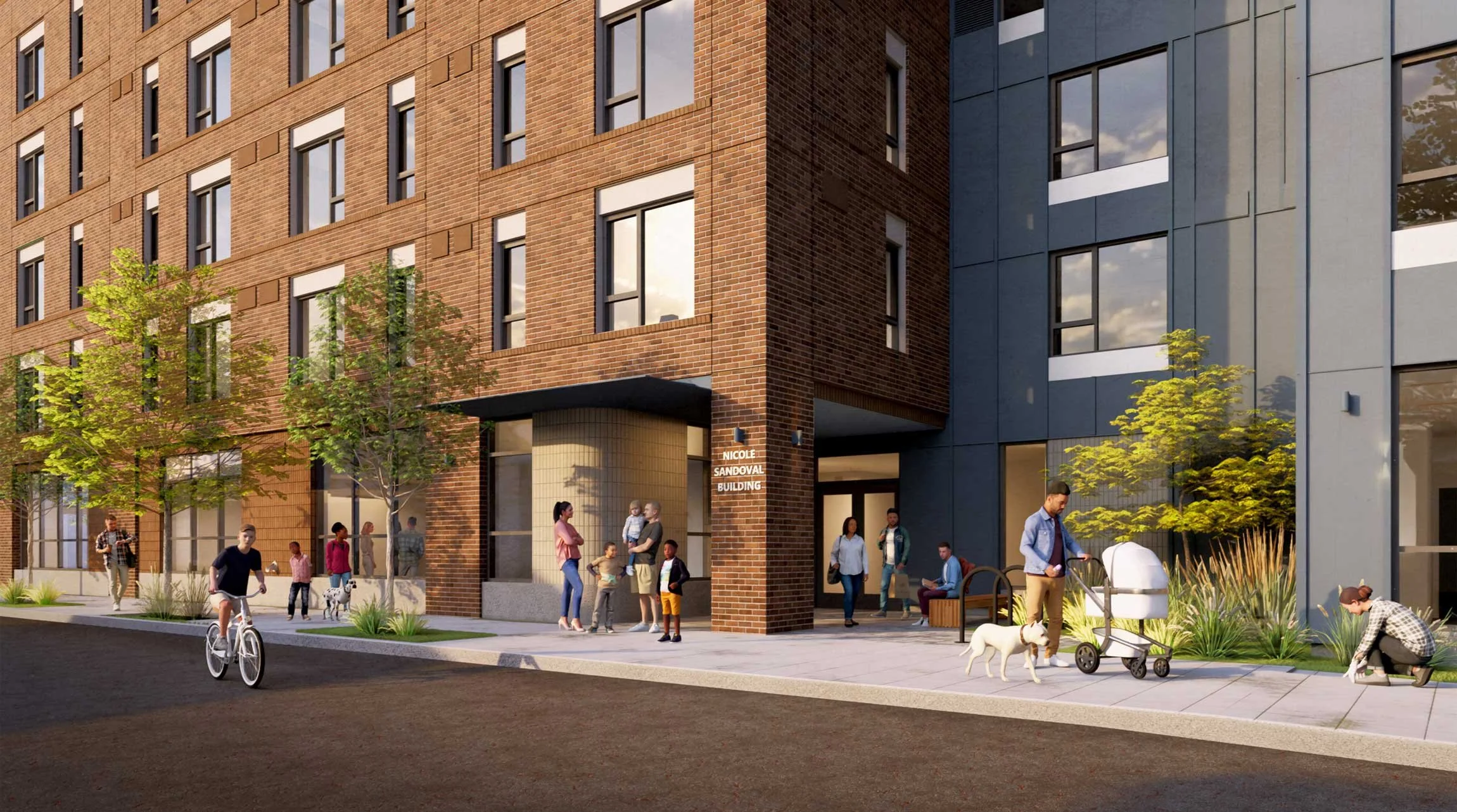
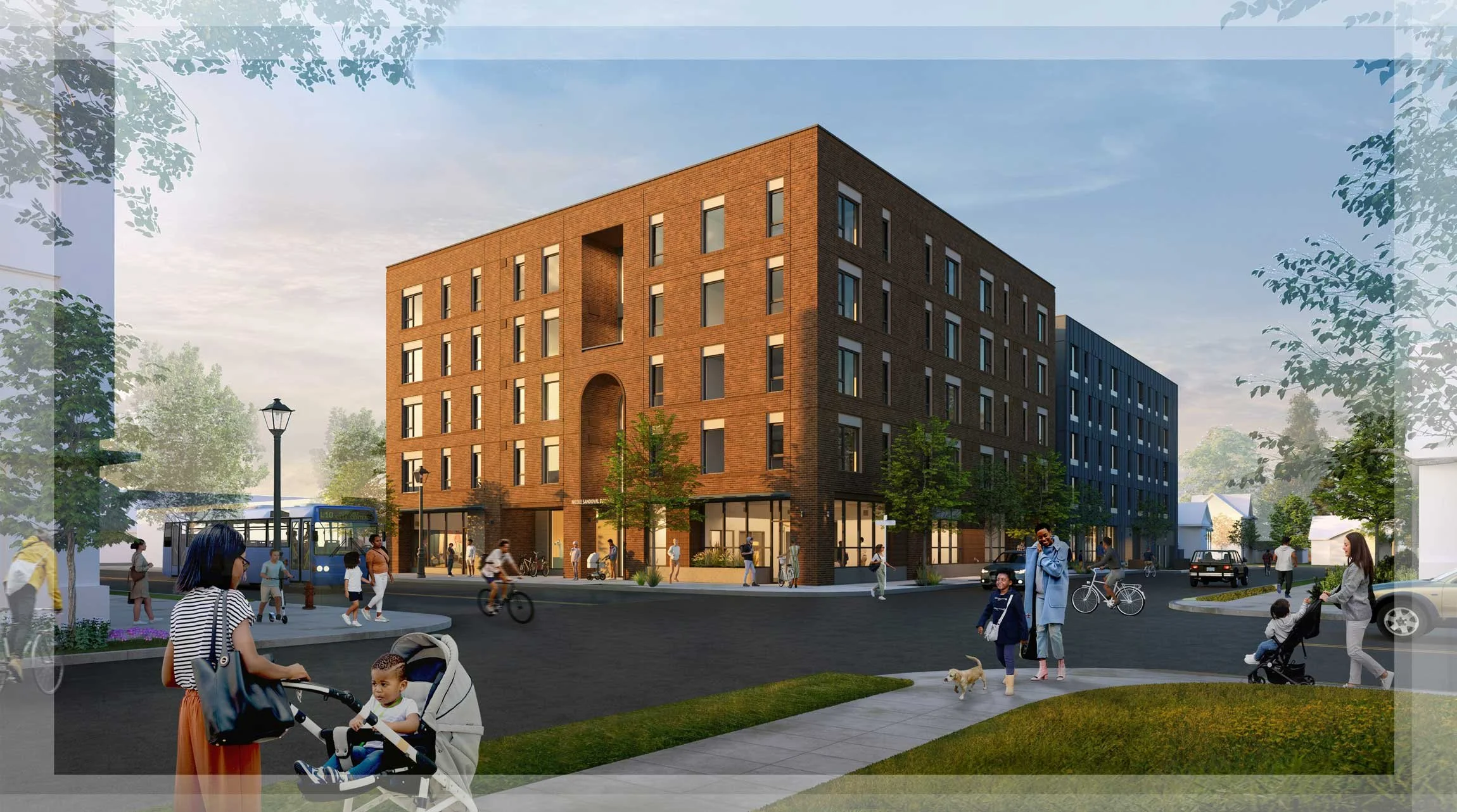
The three-building Avenue Plaza apartment complex, at 5025 N.E. Eighth Ave., is being deconstructed to accommodate construction of the new five-story, 78-unit Nicole Sandoval Building. Its address will be 5015 N.E. Eighth Ave., near the intersection with Northeast Alberta Street.
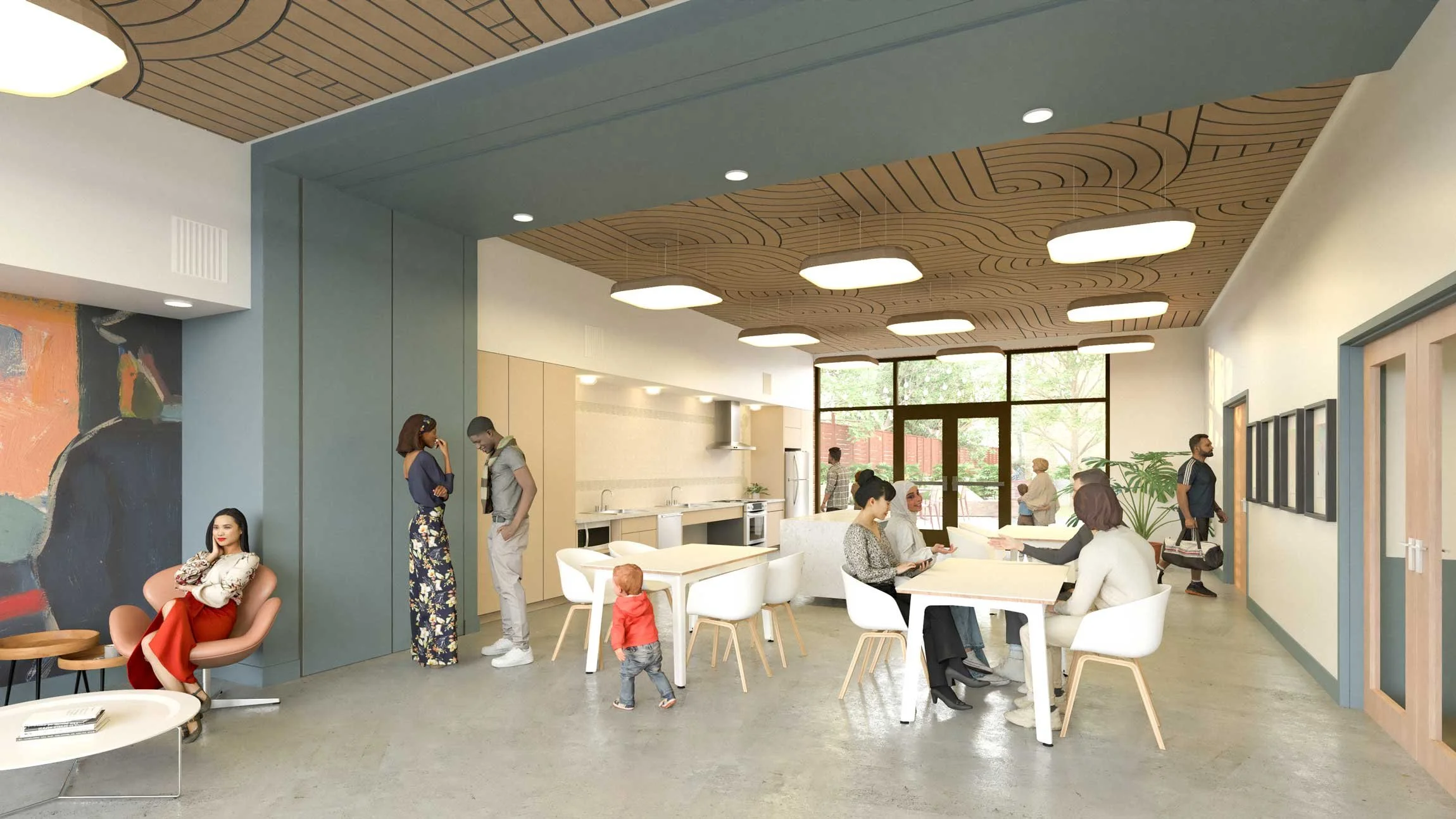
There will be 35 two-bedroom units, 39 one-bedroom units and four studios in the 79,442-square-foot building. Twelve of the units will have accessibility features.
Of the 78 apartments, 22 (via U.S. Department of Housing and Urban Development assistance) will be for individuals earning up to 50 percent of area median income, according to owner/developer Sabin CDC, and the other 56 will be for people earning up to 60 percent of AMI.
The project team also includes development consultant Edlen & Co., architect Scott Edwards Architecture, civil engineer Janet Turner Engineering of Lake Oswego, structural engineer VALAR Consulting Engineering of Clackamas, landscape architect DELA STUDIO, and construction manager/general contractor LMC Construction.
The building is named for Nicole Sandoval, a former resident in one of Sabin CDC’s properties and former chair of its board of directors. She also is an artist and children’s entertainer known as Nikki Brown Clown.
“She was instrumental in a key transition period for Sabin when I came on as executive director,” Sabin CDC’s Mary Schoen-Clark said. “Her support was really important during those days.”
The long-term, primarily Black residents of Avenue Plaza provided the motivation for Sabin CDC to tackle the project, Schoen-Clark said. Due to the rising cost of living in the Alberta Arts District, residents started to move out.
Sabin CDC’s long-term strategy is to ensure Northeast Portland residents can continue living in the community. Previously, the nonprofit delivered the Harvey Rice Heritage affordable housing development featuring the Isaka Shamsud-Din complex (on Northeast Killingsworth Street) and Charlotte Lewis complex (on Northeast 72nd Avenue). Two other projects are in the works.
One of the tasks for the design team was to ensure the Nicole Sandoval Building will fit within the Alberta Arts District, Scott Edwards Architecture project architect Sander Kohler said. The building will have a brick façade on the front and fiber cement siding with a board and batten pattern on the back.
Sabin CDC also charged the design team with the task of designing an energy efficient building able to spare residents from the burden of utility costs, Scott Edwards Architecture principal Hayley Purdy said. In fact, tenants won’t pay for any utilities.
In work with the Energy Trust of Oregon through its Path to Net Zero program, the design team identified many sustainable items for the building. These will include a ground source heat pump (the HVAC system), a 114-kilowatt solar array on the roof, a hot water heat pump system with storage tanks, a battery backup system, an efficient building envelope with increased insulation, triple-pane windows, all Energy Star appliances, full on-site stormwater retention including native plants, LED lighting, and more.
A monitoring system will be used to collect data from solar and geothermal systems in a format easily accessible by staffers, according to JT McElrath, cultural events and communications coordinator for Sabin CDC. That will allow system adjustments to ensure efficient energy use.
In addition, peak shaving will go one step further by accounting for when demand for electricity is high and companies’ rates are highest.
“By lowering our demand on the grid at these peak usage times, we lower our utility bill and provide less strain on the electrical grid,” explained Nathalie Hansen, assistant to Schoen-Clark.
The building won’t be net zero due to site constraints, according to Purdy. However, it is expected to receive certification in the Path to Net Zero high-performance tier. The project team is also targeting NGBS (National Green Building Standard) Green certification at the emerald level.
For seismic resiliency, the building will have a post-tensioned slab between the first and second floors. Several areas on the first floor will connect to the battery backup system and be shelter-ready.
Also, there will be 78 bicycle parking stalls, and the site is one-quarter mile from mass transit.
Construction is expected to cost $36 million. Sabin CDC declined to disclose the full project cost.
Funding is from Heritage Bank, Beneficial State Bank, Network for Oregon Affordable Housing, Enterprise Community Partners, Fairview Trust, Oregon Housing and Community Services, Portland Clean Energy Fund, the U.S. Department of Housing and Urban Development, and Metro.
Deconstruction of the three Avenue Plaza buildings began early last month. Sabin CDC is working with the Portland Bureau of Planning and Sustainability on a commercial deconstruction pilot project, Hansen said. Portland YouthBuilders, OregonServes and Meticulous Deconstruction are participating in the effort.
The team has salvaged ovens, fridges and doors from the Avenue Plaza buildings, Hansen said. Windows have been removed and repurposed at a nursery. Studs and ceiling joists have also been salvaged. Some two-by-fours will be used for an accessory dwelling unit Sabin CDC is building in partnership with the city. Some materials are going to the ReBuilding Center in North Portland.
“We’ve also reinvested a lot of material that was on-site into our existing properties,” Schoen-Clark said. “That’s been a nice legacy moment for the existing buildings.”
Construction of the Nicole Sandoval Building is expected to be completed before it receives residents in January 2028.