Sustainable Design Case Study: Nicole Sandoval Building
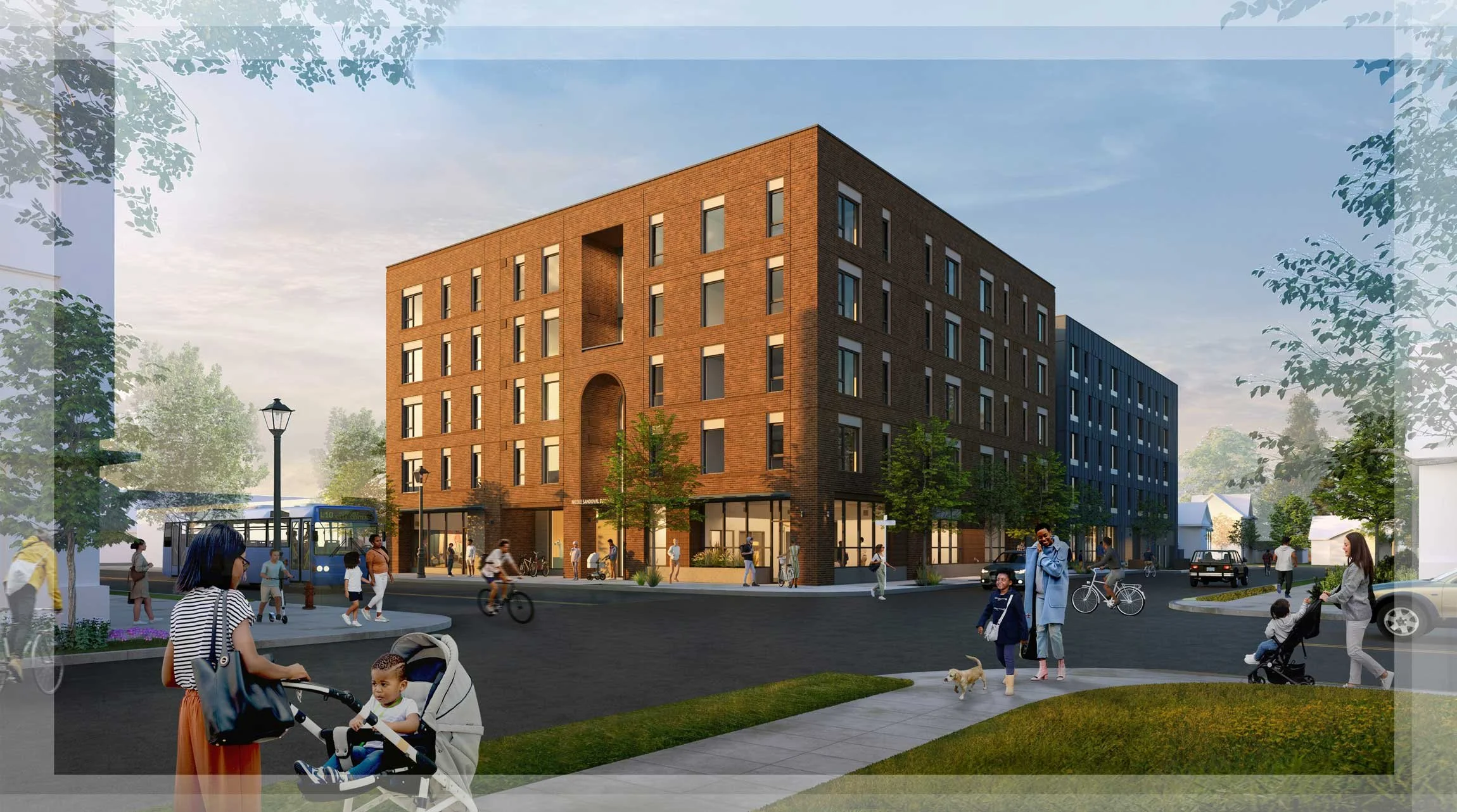
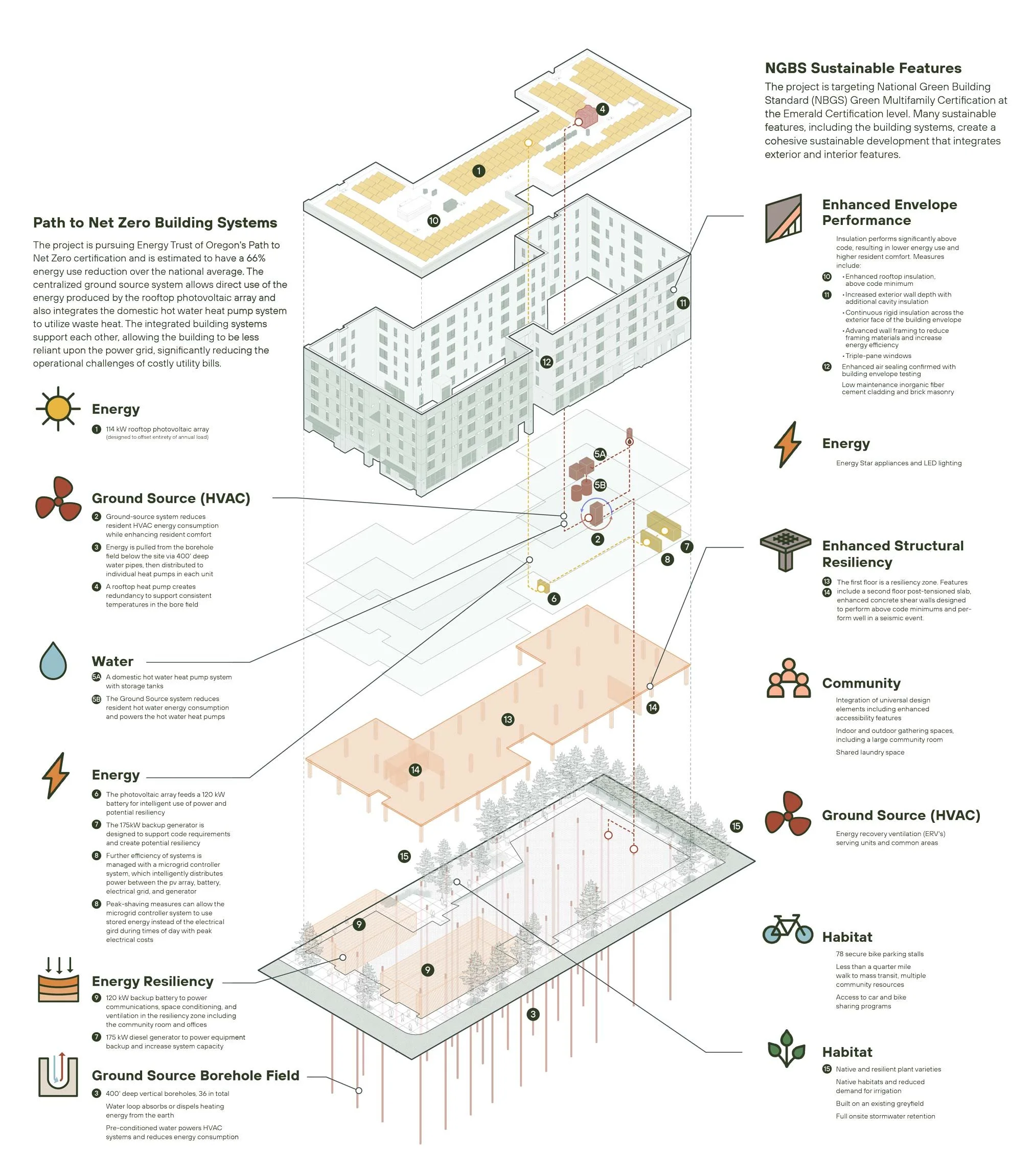
The Nicole Sandoval Building is a holistic response to the need for affordable, high-quality housing in Northeast Portland, an area of the city that includes historically Black neighborhoods impacted by gentrification. The urgency for a sustainable approach was clarified through engagement with the client and stakeholders—it is the burden of utility bills, rather than unpaid rent, that often leads to eviction. An innovative geothermal mechanical system is key to the project's pursuit of Path-to-Net-Zero, which reduces the energy demand, resulting in a reduction in operating costs and elimination of resident utility bills, a crucial step to reinforcing housing stability. Energy use will also be offset with on-site solar.
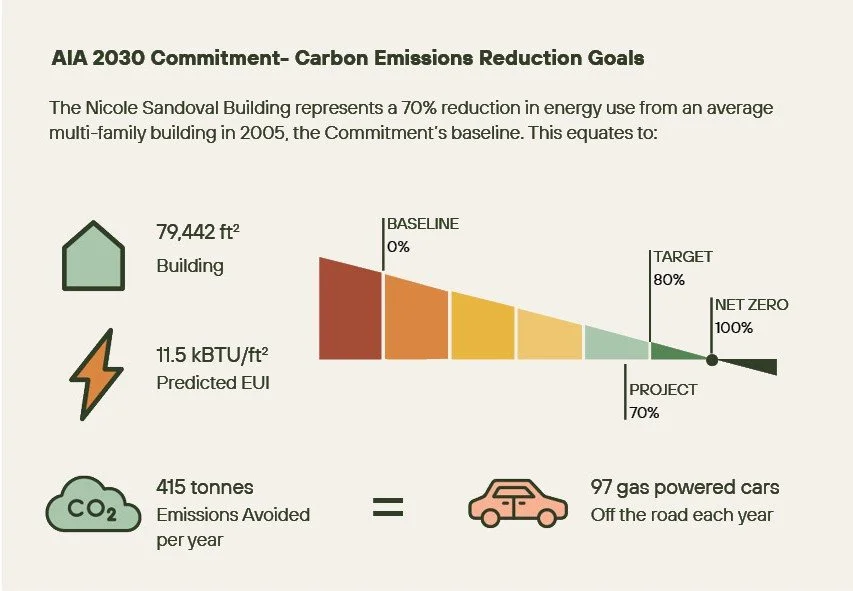
AIA 2030 Commitment – Carbon Emissions Reduction Goals
The Nicole Sandoval Building represents a 70% reduction in energy use from an average multi-family building in 2005, the Commitment’s baseline. This equates to:
Key Performance Metrics
The following are key performance metrics that contribute to the Nicole Sandoval Building’s sustainable design and pursuit of Net Zero Energy and NGBS certification.
All-electric building
2x8 advanced framing for increased cavity insulation (R-30) and exterior continuous insulation
High-performance triple-pane windows in units
Ground source heat pump providing heating/cooling and integration with centralized heat pump hot water heating
Rooftop solar array
Onsite battery storage and generator sized to provide standby power
Energy control center to manage power between solar, batteries, and generator including peak demand shaving strategies
EUI before solar = 17.5; EUI after on-site solar = 11.5