Using Post-Occupancy Evaluations for Positive Change

Authors
Juliette Grummon-Beale
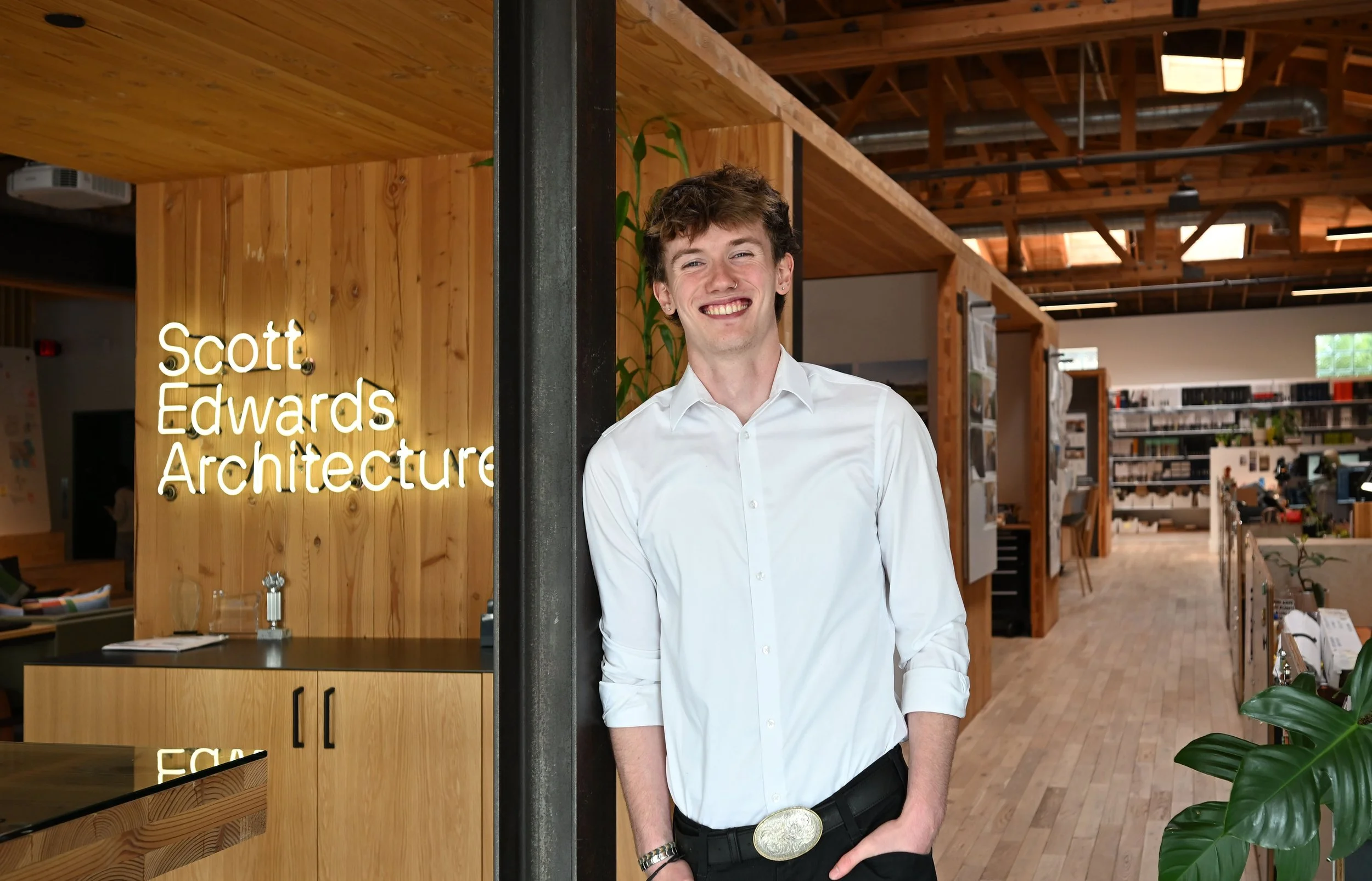
Portland’s Sustainable Building Week delivered another year of exceptional education, resources, and networking, and Scott Edwards Architecture was honored to sponsor an event ourselves, now in our third year of hosting. Safe to say, this has become an important annual tradition! This year’s event, titled “Using Post-Occupancy Evaluations for Positive Change,” focused on how Post-Occupancy Evaluations (POEs) can be used and lessons learned. These studies systematically evaluate a building after it has been occupied to assess how well it’s meeting the users’ needs and identify opportunities for improving occupant satisfaction, building performance, and functionality.
Conducting a post-occupancy evaluation not only provides us with quantitative data for tracking sustainability successes based on actual performance, but also provides qualitative feedback to analyze how inclusive and equitable the buildings are for those who are impacted most. Our event was formatted as an interactive “how to” workshop. SEA first provided a general overview of the topic and framework for POE development. Team members shared POE case studies, and attendees broke into small groups to apply these lessons to planning a POE for their assigned hypothetical project. With over thirty attendees, the small groups strongly engaged with the material and considered the following for planning a POE:
Background information to gather- as-built drawings, utility bills, etc.
Qualitative and quantitative metrics to evaluate
Survey questions to ask building users or facility managers
The discussion that followed was rich and thoughtful, identifying more questions, such as:
What strategies can be used for financing POEs?
How do teams share negative results without exposing themselves to risk?
How can we leverage these lessons learned to grow as an industry?

Positive change derives from assessment results by not just improving the evaluated project, but also informing design solutions moving forward. Taking the time to better understand the actual performance, functionality, and occupant satisfaction of our work during occupancy allows us to validate our design assumptions, helping our clients and our communities. Sharing and collaborating through events like SEA’s for Sustainable Building Week also supports our collective growth as an industry, important as our work can have a far-reaching and positive impact. Thank you to everyone who attended!
Engaging with Events Beyond Our Own
SEA staff participated in many Sustainable Building Week events this year and took away inspiring and valuable information promoting sustainable practices and design across Portland. We list below which we attended and the takeaways.

USGBC Oregon | Women in Green Panel
Women in Green events have served a key role within the USGBC since 2012 as a powerful means to showcase leadership, innovation, and equity in the built environment. SEA’s Sustainability Director, Juliette Grummon-Beale, was excited to be invited to take part in this panel of forward-thinking women leaders. Panelists shared their personal stories and experiences of overcoming challenges, implementing innovation, mentoring and empowering the next generation, and creating positive change through their work and in their communities.
Portland Materials Transparency Collaborative - Pecha Kucha Night
The Portland Materials Transparency Collaborative held a Pecha Kucha night profiling materials at Solus’s office and showroom. Short, 6-minute presentations ranged from earth-based plaster and human health hazards in the quartz fabrication process, to mass timber air leakage studies. SEA’s Associate Principal Dave Mojica and Associate Alexa Cano presented on the process of using reclaimed wood for light fixtures at the Mahonia Crossing affordable housing project.
Tour of Mt. Scott Community Center
FFA Architecture and Interiors hosted a series of tours of the recently completed Mt. Scott Community Center renovation and expansion. SEA Principal Jesse Graden and Juliette attended a tour focused on the project’s resiliency strategies, which included operable windows, efficient HVAC (including radiant floor), thermal mass, and a solar array, but were most awed by the prominently featured mass timber CLT floors and roof and the glulam columns and beams.
CoDesigning Resilient Communities
CoDesign Collaborative held a panel on balancing urgent social challenges with long-term climate and natural hazard resilience. SEA Principal Hayley Purdy and Associate Principal Alexi Meuwissen attended and left with some impactful takeaways, including the connection between community cohesion and community resiliency, the role that climate justice plays in resiliency, and that “every $1 you invest in resiliency saves you $11 for recovery,” an impressive stat!
The AfroFuturism Oasis: Empowering our Futures
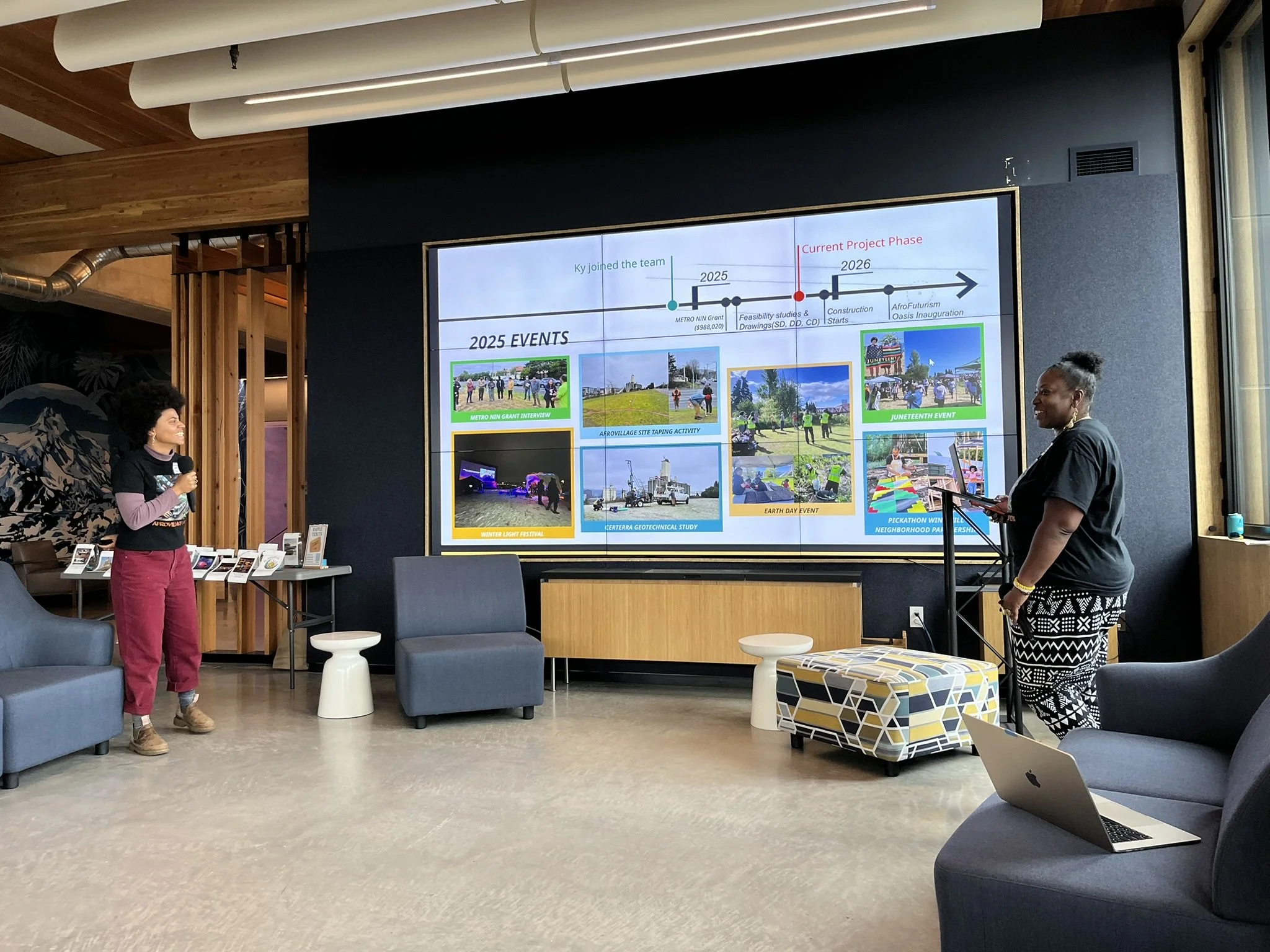
AfroVillage PDX provided attendees with an update on the progress of their AfroFuturism Oasis project, a community resilience hub to empower the Black and Brown communities located in Portland’s Albina neighborhood. SEA volunteered with AfroVillage last Spring to help clean up and prepare their site for the Trimet trains that will serve as the hub’s buildings. SEA’s Associate Principal Tom Byrne, Interior Designer Jay Thornberry, and Juliette all attended, and they were inspired to hear that the project is coming together and going in for permit by the end of the year.