Best Practices for Designing Centers of Community, Culture, and Recreation

Authors
Jennifer Marsicek
Vanita Carrillo-Rush
There are few places that can define, uplift, and inspire us like centers of community, culture, and recreation. These spaces bring people together and become landmarks and beloved destinations. They have the ability to improve one’s physical, social, and mental well-being and act as conduits for human connection and community-building. When privileged enough to be designing these centers, Scott Edwards Architecture pulls from our long history of public work, applying best practices to deliver a place made by and for the people who will use it. In this blog post, we outline our best practices, exploring the ‘how’ and ‘why’ behind engagement, opportunities for multi-agency partnerships and phasing, benefits of adaptive reuse and sustainability, planning for the future with flexible architecture, and more.
Defining this project type.
When we say “Centers of Community, Culture, and Recreation,” what do we mean? For SEA, this type of space is publicly funded, at least in part owned and operated by a public entity, and in some cases, it can have a non-profit partner. Places like community centers, cultural centers, recreation and fitness centers, aquatic centers, theater and event spaces, makers spaces, libraries, and art centers all fall under this category for our firm.
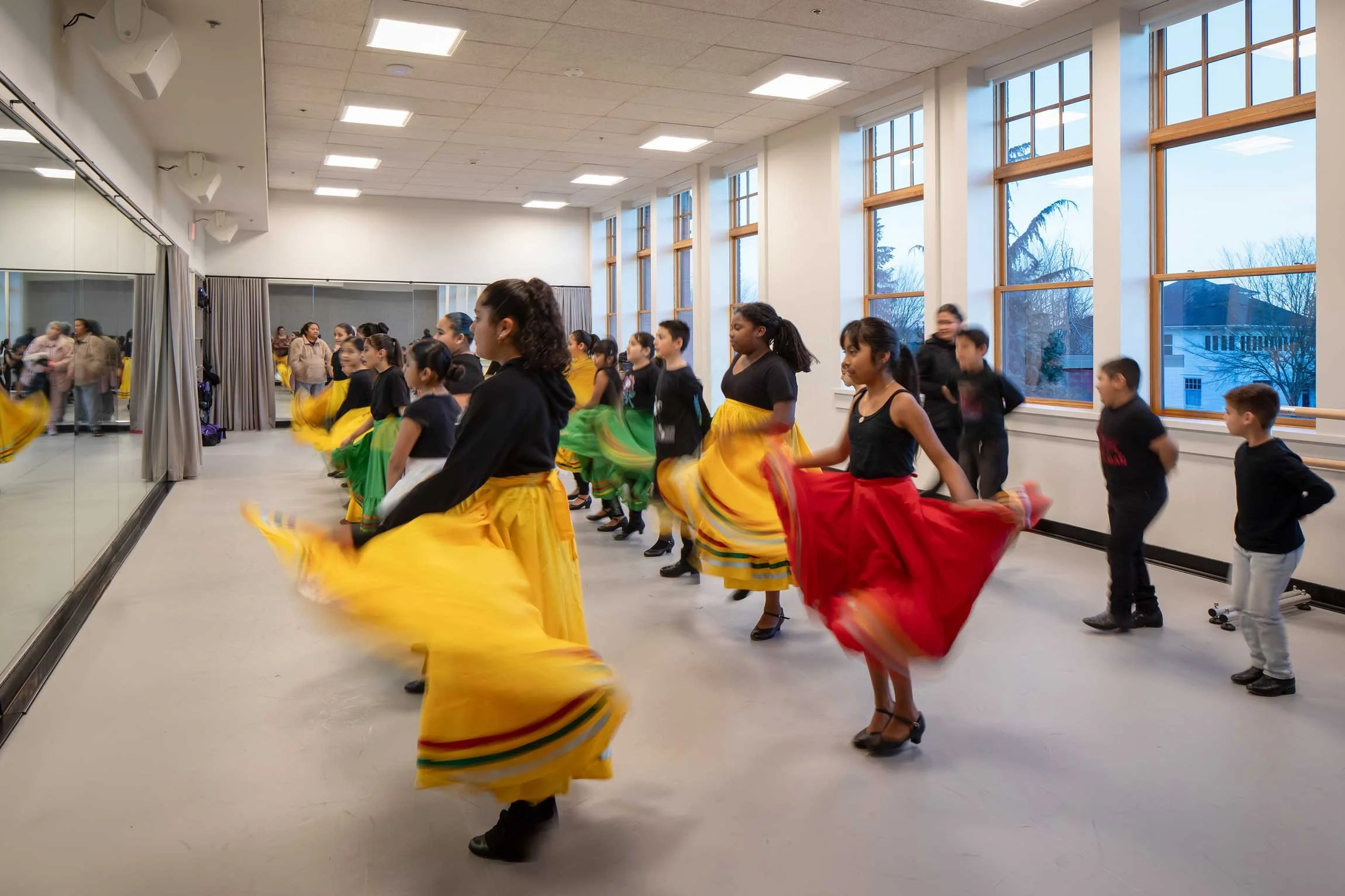
As part of the Chehalem Cultural Center adaptive reuse, classroom space in the former school was renovated into a new movement studio. The studio hosts many local dance and performance arts groups, including a Ballet Folklórico rehearsal, shown here.
Design Best Practices
1. A design influenced by the community it will serve.
While seemingly obvious to state, the members of the community should influence the design of the spaces meant to serve them. And this isn’t just because it’s in their community; it’s because the input makes the architecture stronger. The benefits of engaging with stakeholders—including a diverse representation of community members, neighborhood associations, local non-profits, and anticipated users of the space that accounts for inclusivity in abilities, ages, cultures, and identities—will be evident in the functionality and resonance of the design. The elements, and how the elements come together, will be more contextual, and solutions will be tailored to need, crucial for a successful project.
“The benefits of engaging with stakeholders…will be evident in the functionality and resonance of the design.”
SEA’s Lake Oswego Recreation and Aquatic Center is a prime example of design influenced by community. The aquatics portion of the facility illustrates this clearly, with the recreation pool zoned to accommodate swimmers of all abilities by providing different depths and a separation between children’s play structures and an area suitable for water aerobics, preferred by older adults. At the competition pool, students and coaches from Lake Oswego’s middle and high school swimming and water polo teams provided invaluable feedback regarding pool size and depth, lane number and direction, deck size and seating requirements, placement of a bulkhead, and other features. City and community-led committees on sustainability and resiliency also influenced the design and selection of HVAC equipment, and seismic and emergency readiness beyond code requirements.
2. Apply tailored research and engagement methods.
Applying tailored methods of research and engagement is a best practice that starts with recognizing that projects are not one-size-fits-all. Gathering usable information is pivotal to shaping a place for the community, and the methods listed below provide a framework to start with and then adjust as needed to meet the preferences and particulars of a given location.
Investigate Context: learn about the past, present, and desired future of the community. What is the area’s history? What values does it hold? What is it working toward? Who lives here now, who lived here in the past? What neighborhood context—present and historical—should inform the building’s architecture? How can what is learned in this research be applied to make a more resonant space?

The Redwoods Discovery Center renovation modernizes a 1970s building to serve as a flexible community asset and interactive resource for visitors to the Redwood corridor. The architectural approach preserves significant elements like the interior’s old-growth Redwood cladding and the existing architecture’s “Sea Ranch” style, a representative vernacular on the Northern California coast. The renovation is part of a reimagining of Crescent City’s Beachfront Park to include a new plaza and an interactive walking path, called the Tolowa Trail, sharing the history of this area’s Indigenous people.
Research the Surrounding Natural Landscape: nature is important context, too. Research natural features that may define the community—mountains, rivers, the ocean, caves, the desert, fields. Is there an animal or plant meaningful to the region? How does nature influence daily life? How then can nature be further brought into daily life using design?
Listen and Learn: create a project environment that invites people into the process. Identify, attend, and learn from city, neighborhood, and organization meetings for groups impacted by the project, use a mix of digital and in-person methods to gather and share input, and take the extra step to find and engage with those in the community who aren’t always heard but should be.
Create a Feedback Loop: after gathering information through engagement and research, show stakeholders how it influenced the design of their space, creating a feedback loop that encourages continued engagement.
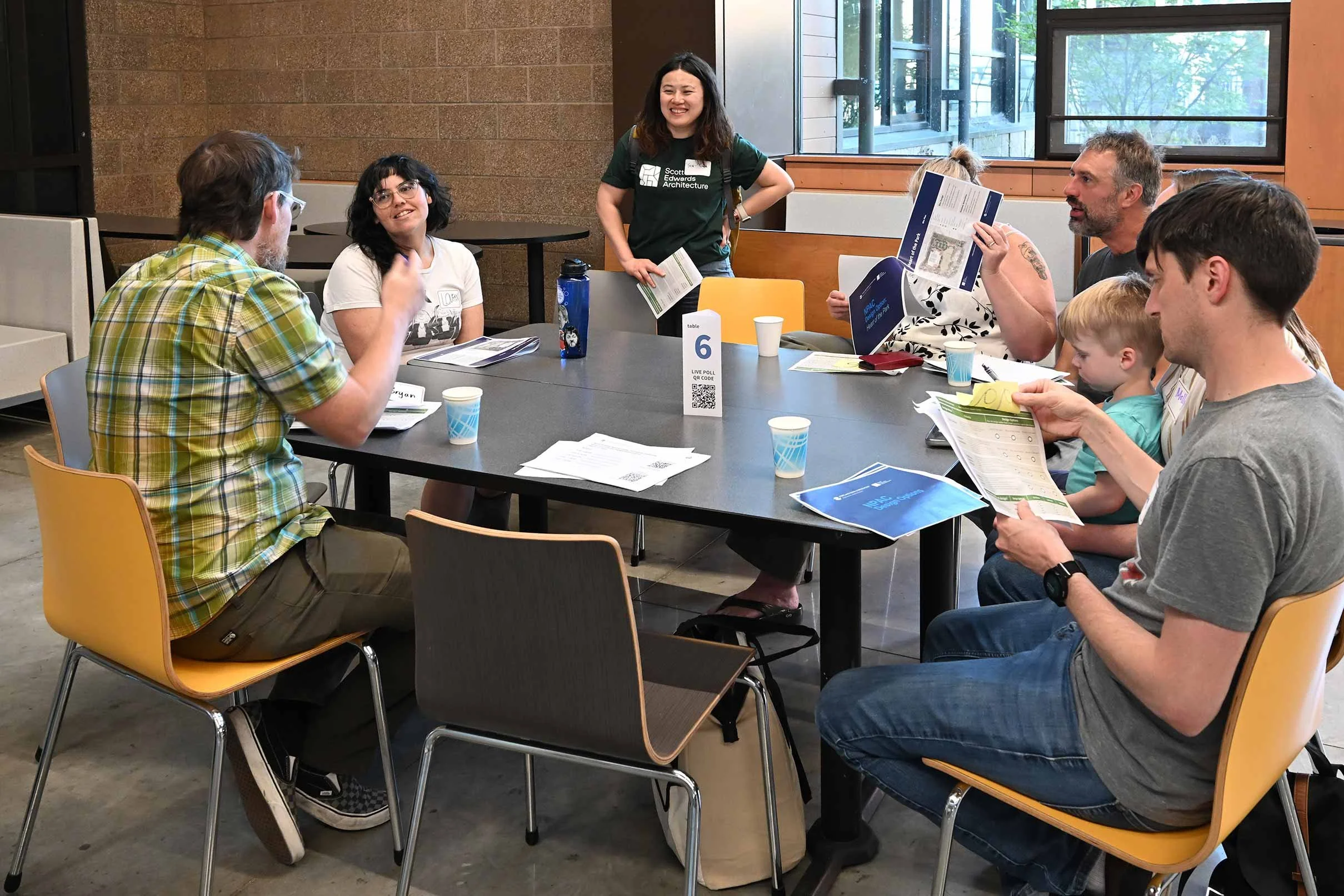
For the North Portland Aquatic Center project, the City had established community preferences during the site selection phase, prior to SEA and Perkins&Will being selected to lead the design. Along with project goals, these guided the design through the concept phase. During early community engagement meetings when concept options were presented, the design team directly tied the concepts to the established preferences, demonstrating to community members the impact of their input.
3. Make it multi-purpose.
We’ve learned that public agencies can require years to develop program priorities and raise the funds needed to support them. We also understand that needs evolve, so when an agency reaches the point of building or renovating, and funding is secured, ensuring the design is multi-purpose is important, as the opportunity to expand may not arise again for some time.
Our approach to designing for multiple purposes starts with identifying priority uses. Then, together with our client, we explore opportunities to shape spaces with flexibility in mind. This may mean discussing their long-range goals and vision, perhaps programming not included in the current project but being considered for later work, and investigating ways that the architecture can account for the future now. For example, if a ballroom for weddings is a priority, as it was for our Chehalem Cultural Center project, how can we achieve that priority in the design while also making it multi-purpose? We can design for good acoustics to support music performances, select durable floor finishes to accommodate everything from car shows to plant fairs, and create large openings to the exterior and multiple entries/exits to ensure people and objects can move in and out easily. We can also incorporate AV equipment, changeable lighting, storage space, and connectivity to food and beverage and other support spaces that consider other uses beyond the stated priority.

The Chehalem Cultural Center ballroom was designed to be multi-purpose, acknowledging the varied and likely-to-evolve needs of the community.
4. Prioritize sustainability, incorporate early.
Setting sustainability goals at the beginning of the project alongside the complete project vision facilitates an integrated design and increases the ability to make a positive impact while remaining cost-efficient. Sustainable design solutions can save costs on energy, operation, and maintenance in the long-term, and in high-use facilities that are publicly funded, these considerations are good stewardship. Selecting sustainable materials, prioritizing daylighting and biophilia, and promoting inclusivity are all sustainable design elements and key ingredients to stronger architectural responses and building longevity.
“Sustainable design solutions can save costs on energy, operation, and maintenance in the long-term, and in high-use facilities that are publicly funded, these considerations are good stewardship.”
The North Portland Aquatic Center (NPAC) is targeting LEED Gold. SEA understood at the outset that the project would have ambitious sustainability goals, and because this was identified early, navigating the complexities and requirements of LEED, the energy code, and city and state policies, due to an aquatic center’s high energy-intensive use, has occurred in tandem with other development decisions. Prioritizing open space on the site, reducing carbon emissions, and maximizing daylight while minimizing glare on the pool surface are also project goals made more achievable by early identification.
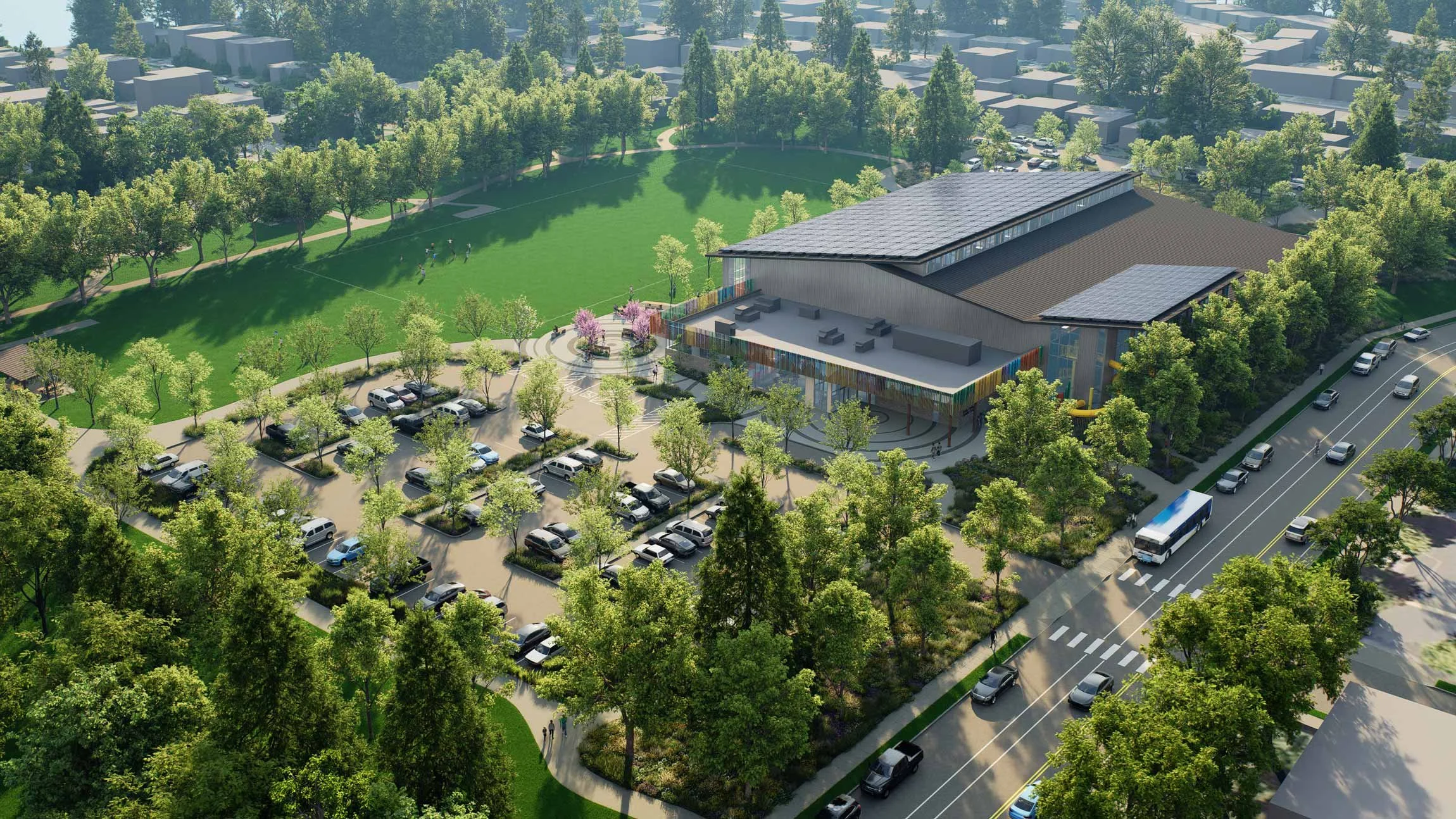
In alignment with the project’s focus on environmental stewardship, the NPAC team initiated an interactive eco-charrette early in design to establish sustainability and resiliency goals and a path forward to achieve them. The eco-charrette examined synergies and strategies across the multi-disciplinary team and inspired highly sustainable aquatic center design by highlighting real-world examples of what is possible.
5. Consider phasing as an approach.
Phasing can be an effective project approach for centers of community, culture, and recreation, and considering this as an option is a conversation the SEA team can help inform. The benefits of phasing to discuss as part of the decision-making process include:
Staged opening: staging a project allows portions of the facility to open sooner than if the entire design and construction were completed at once. If a part of the program is a revenue generator, for example, this can mean raising funds for the other phases. Similarly, if some of the programming is serving a vital community function, having that piece come online as soon as possible may be a priority.
Occupied renovation: when renovating an existing facility, phasing the renovation work may allow the center to remain open and occupied. For the reasons mentioned in the previous item, this could be a client priority.
Evolve as needs change: phasing allows the client and the community to respond to changing desires and programming needs. For example, if our client elects to include a master planning phase, we can complete a master plan that establishes a strong framework for the overall vision that is still nimble enough to evolve once the design phase begins and new or changed priorities are established.
When considering phasing and whether it is the best approach, we encourage clients to balance the decision with the likelihood of higher costs. Material and labor costs trend higher over time, and mobilizing a job site in phases also tends to cost more than performing all the work at once.
6. Explore adaptive reuse.
Adaptive reuse affords tremendous opportunities for many of these typologies. If it’s an option for our clients, we always encourage them to consider it for the following reasons:
Cost savings: depending on the scope, adaptively reusing an existing building rather than building new can be budget-friendly. This is particularly true when the existing building already includes aspects of the desired program, like when a school is converted into a cultural center, and the existing auditorium can serve as a theater. Seismic, fire life safety, and accessibility requirements need to be evaluated and considered in the overall cost of reuse.
Existing character: existing buildings often have a look and feel that is difficult, if not impossible, to replicate without significant expense. Examples of this include intricate brick details, timber trusses, heavy timber beams and decking, hand-forged and riveted metal fire doors and hardware, vintage lighting, and other historic elements of older building stock that can be left exposed, carefully cleaned, refurbished, and celebrated.
A building’s next chapter: an existing building may be a cherished part of the community that no longer functions for its original use, but could continue to be a community asset if reused for a new purpose. Adaptive reuse gives new life to a community’s existing building stock.

The Chehalem Cultural Center adaptive reuse maintained the building's character by leaving existing materials in place where possible and salvaging and repurposing in new ways when not. Reused materials are used to accentuate special points within the renovated building, such as entry alcoves and wood accent screens flanking the main entry and reception window. Wood doors were also salvaged, refinished, and reinstalled in new locations.
7. Multi-agency partnerships.
When multiple agencies/organizations have overlapping goals, partnering together to realize a shared facility is a beneficial approach. The partnership can allow for combined funds and staff resources for the project, along with shared operational costs and staffing once the facility is built.
The partnership strategy used by SEA’s Lake Oswego Recreation and Aquatics Center project demonstrates potential avenues available to municipalities. An Intergovernmental Agreement between the City of Lake Oswego and the Lake Oswego School District formalized the partnership, with the City and the District both contributing funding for the new facility. The City owns and operates the pool, and the District contributes towards pool maintenance and reserves access seasonally, ensuring student aquatics programming is prioritized in the schedule. As previously mentioned, representatives from the District were also involved in the aquatics design process.
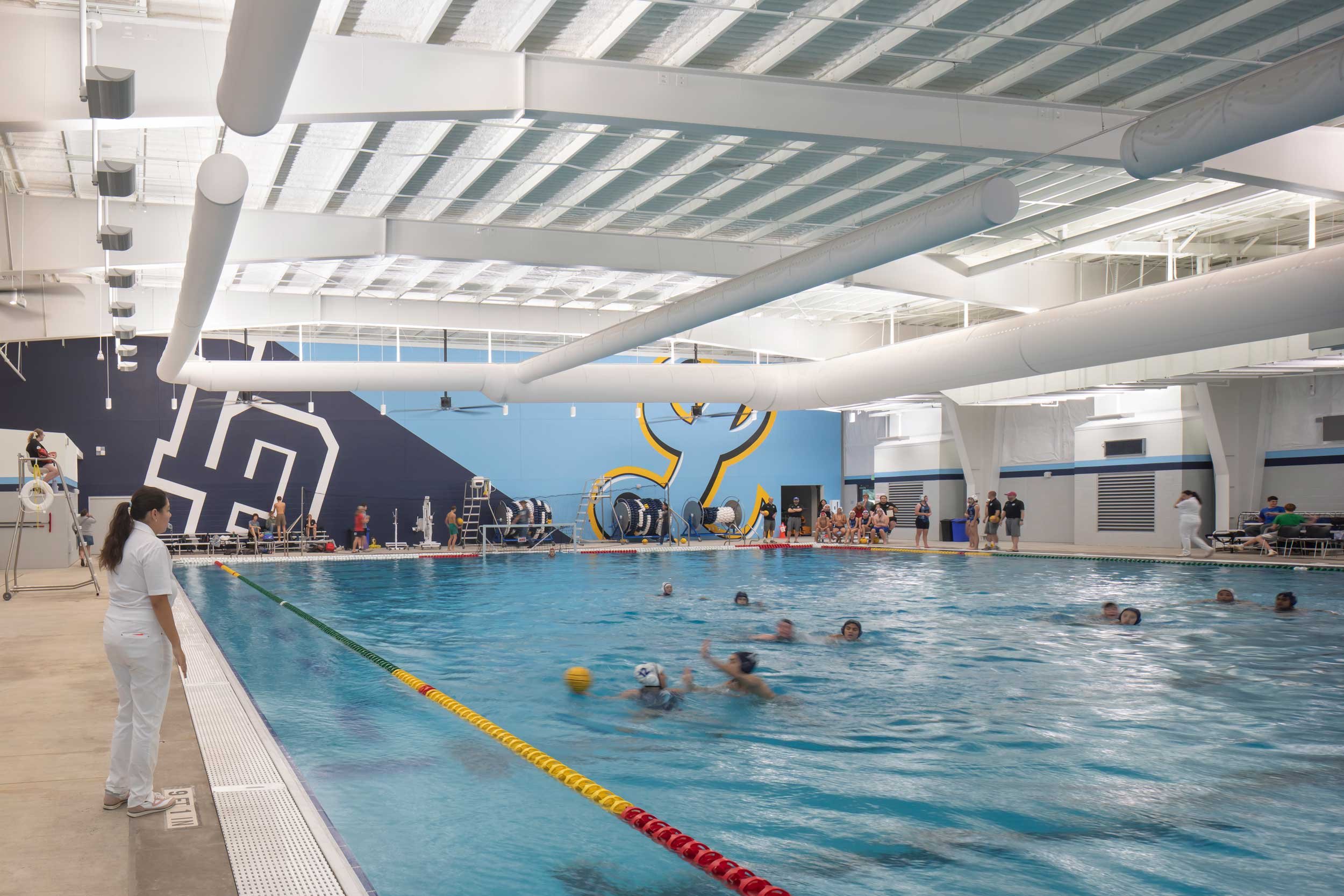
During high school water polo season, the Lake Oswego Recreation and Aquatics Center competition pool is transformed from lap swimming to a regulation format for matches, demonstrating the design’s flexibility and consideration for the partnership.
8. A place to build community.
Architecture’s ability to have a positive impact on the lives of the people it is for inspires our work. Each of the previous items culminate to using design to create a place that builds community. Centers of community, culture, and recreation are landmarks and assets. They are often low-to-no-cost for entry, ensuring access no matter a person’s economic status. They provide common gathering and activity spaces that support a myriad of uses and are typically conveniently located. These spaces will pull people in and encourage togetherness across demographics, strengthening communities and building resiliency. The ripple effects of these projects are felt well beyond the surface-level “use,” and through considered design, we have an opportunity to multiply resonance—a people-first, design-forward vision SEA strives for.
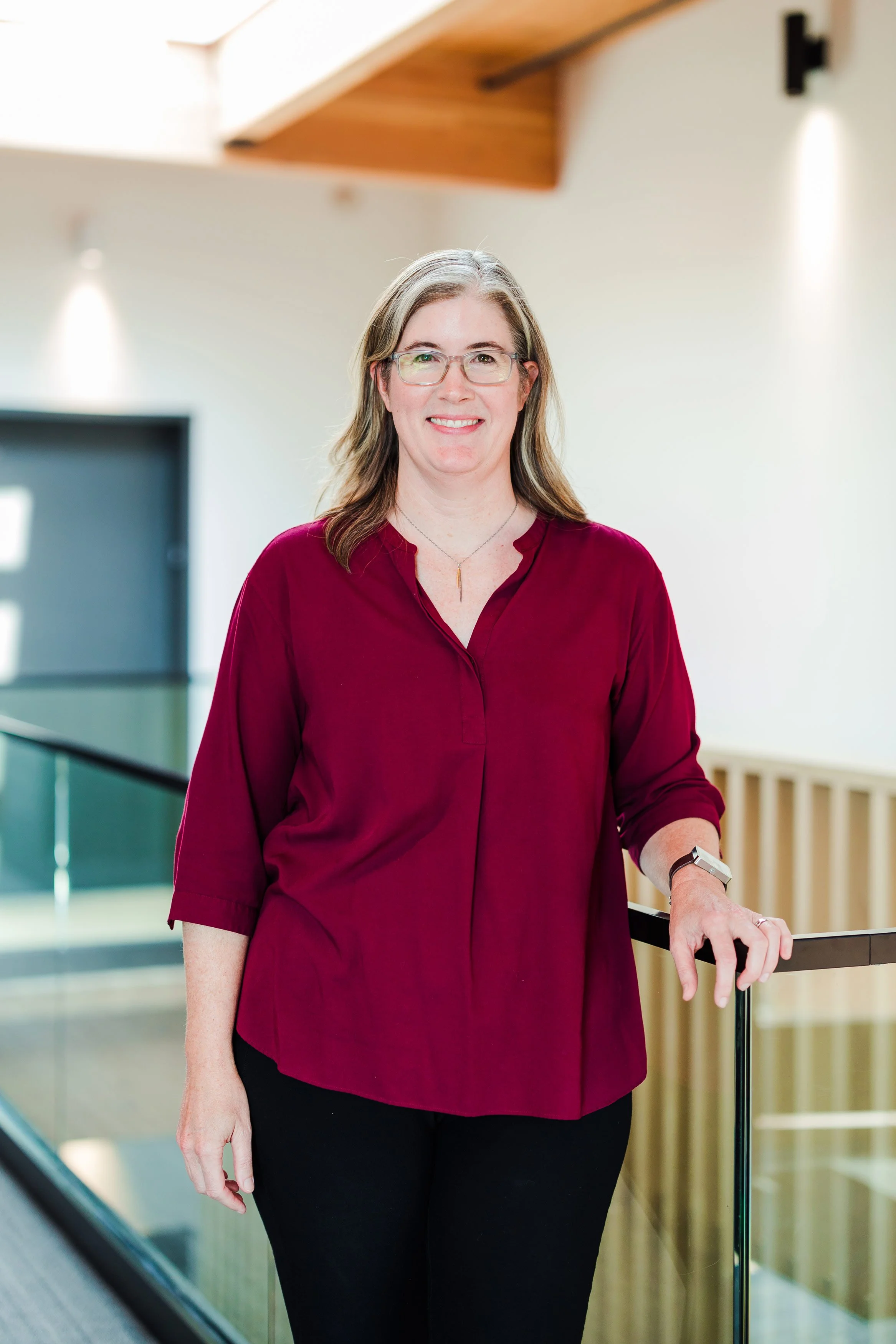
Jennifer Marsicek is a Principal at Scott Edwards Architecture and has been practicing architecture for over 25 years. As Principal, she is a leader in the firm’s community-driven projects, including places for recreation, aquatics, community, and arts. The architecture of these places interests Jennifer on several levels. As a designer, they can be complex, and that makes an interesting puzzle to decipher. And personally, because she is active in volleyball and pursuits like ceramics, she understands how valuable these spaces are to people’s well-being. Jennifer has designed 3 of Oregon’s most recent aquatics facilities—the Lake Oswego Recreation and Aquatics Center, the Chehalem Aquatic and Fitness Center, and the currently in-design North Portland Aquatic Center.