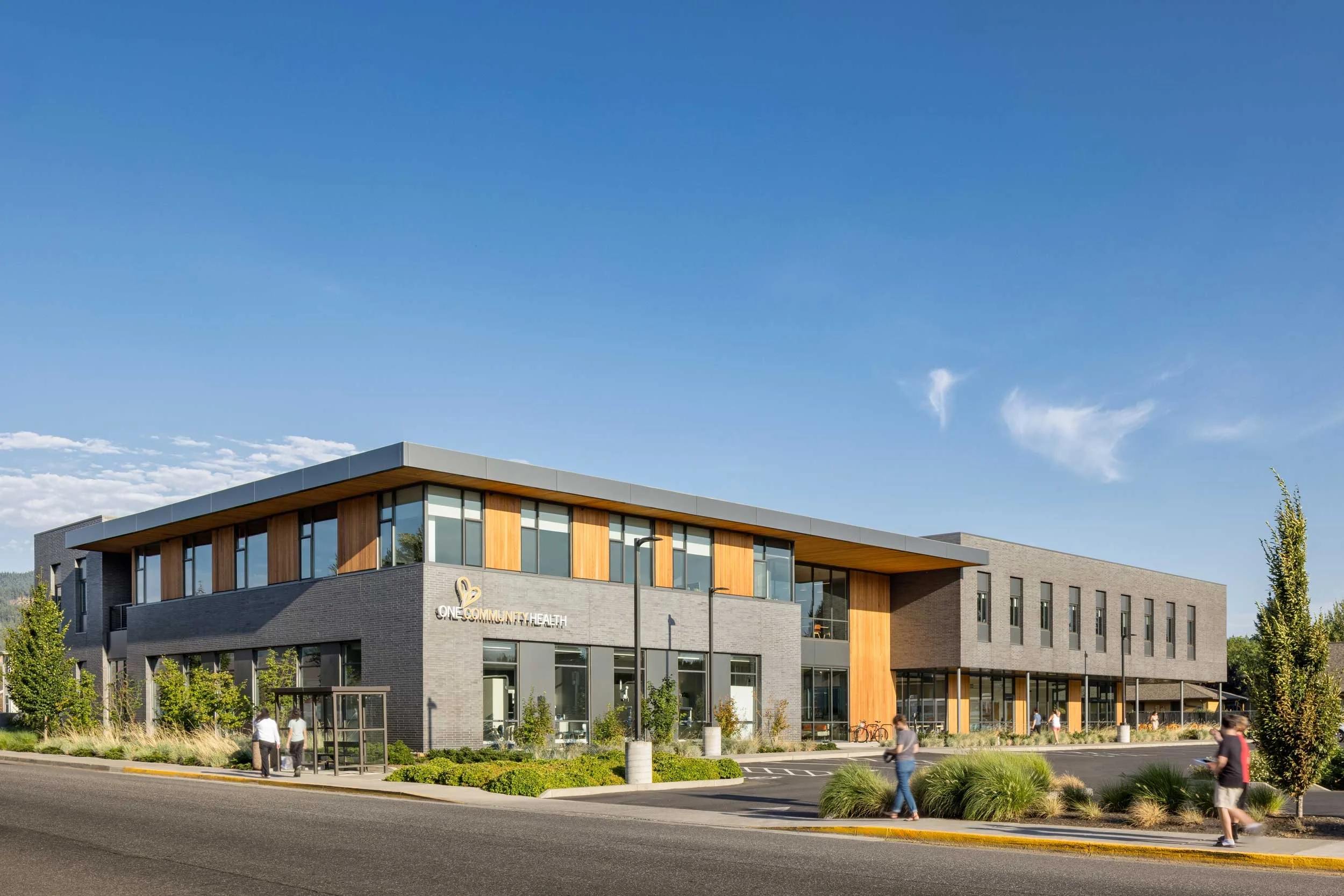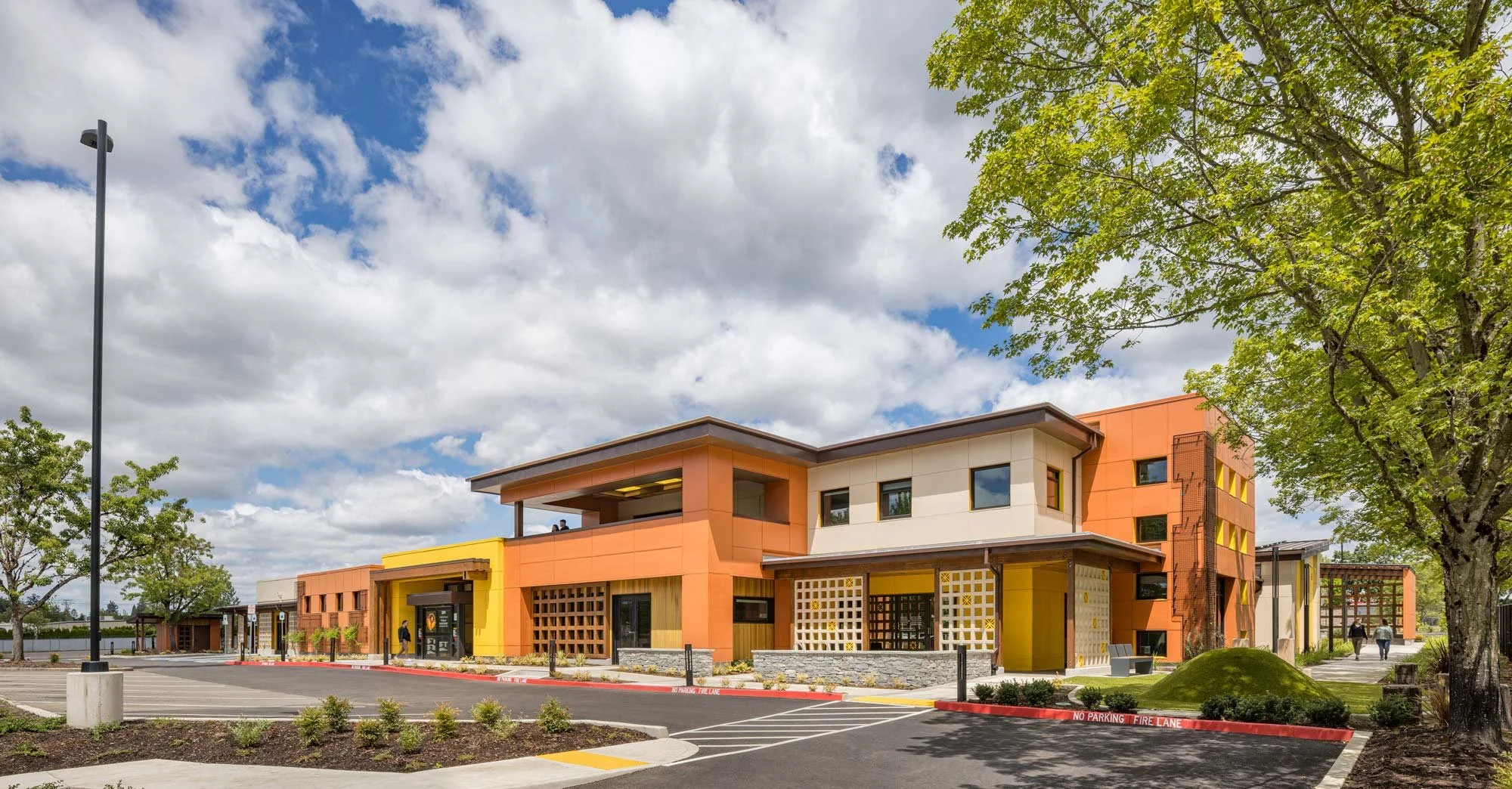
VA Eugene Behavioral Health Recovery and Reintegration Services Clinic
Intuitive, accessible mental health clinic for veterans
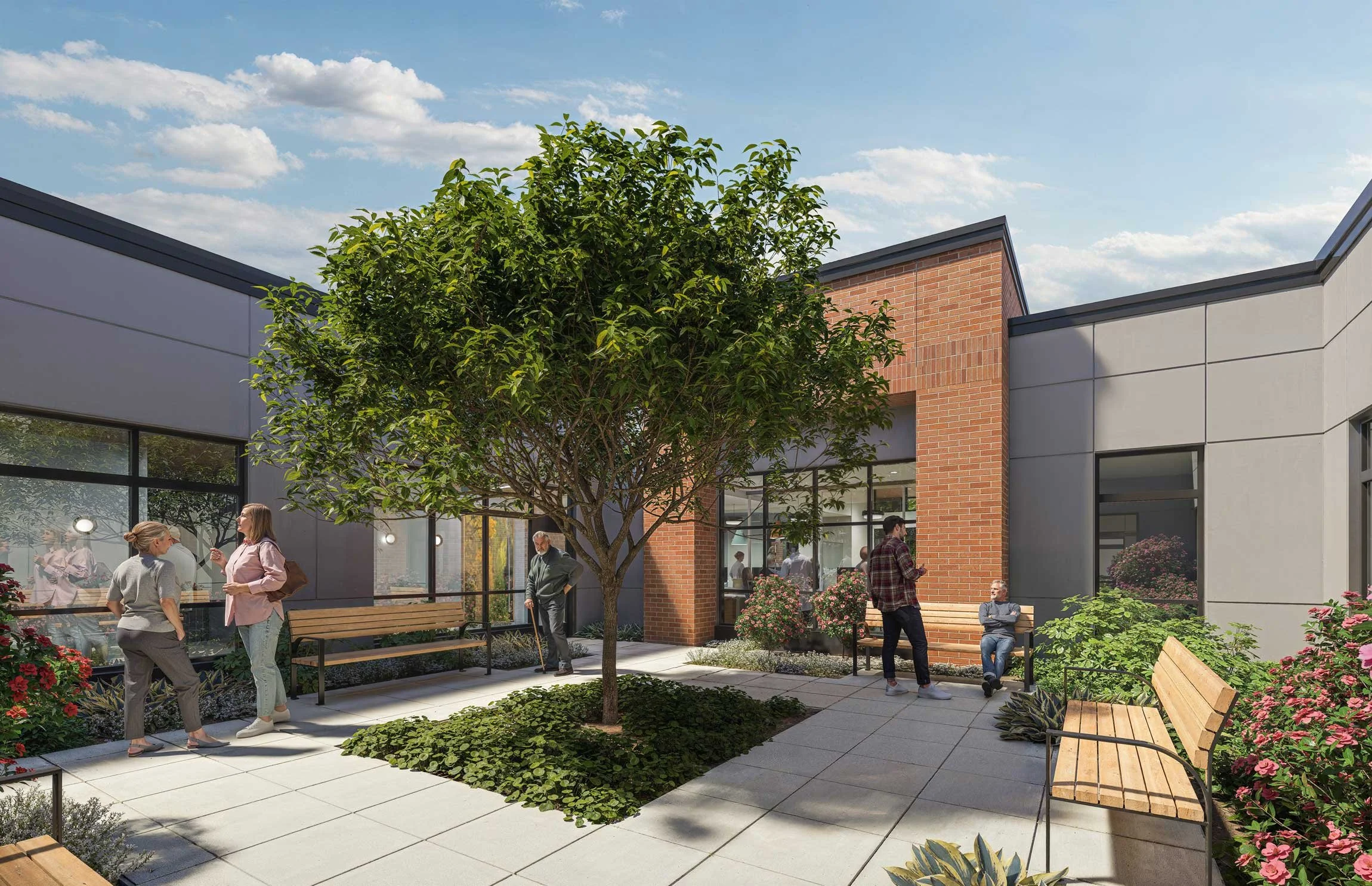
The Behavioral Health Recovery and Reintegration Services Clinic (BHRRS) is a new facility in Eugene, Oregon, providing mental health and social work services to veterans. While privately developed and owned, the building is adjacent to the Veterans Administration Eugene campus and designed as a complementary facility, as the VA will be the tenant. Scott Edwards Architecture partnered first with the developer to design the core and shell, and then with the VA to design an interior tenant improvement. The architectural approach prioritizes a welcoming and highly accessible space, with intuitive adjacencies and wayfinding, contextualized materials, and connection to the outdoors through glazing and a landscaped courtyard. The BHRRS increases access to integrated services in the region, creating a place that supports holistic care for those who have served.
Location
Eugene, OR
Size
20,829 sf
Year
February 2027
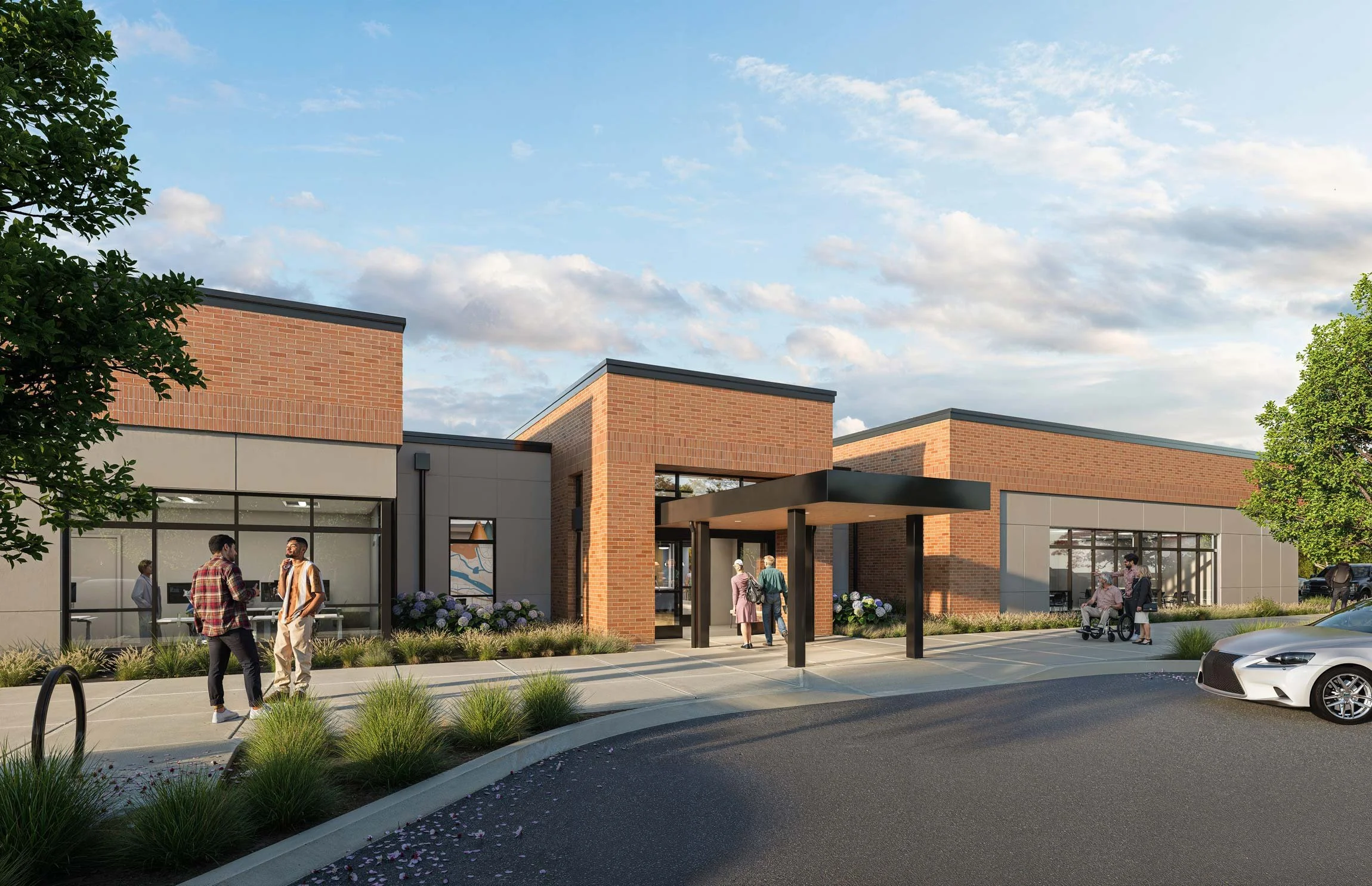
The building’s massing consists of two large volumes, one housing the mental health services and one housing the social work services, and a third, smaller brick volume placed at the front. The brick volume contains the entry and lobby and visually connects visitors to an inner courtyard. The inner courtyard, envisioned as a quiet retreat for respite, is formed by linear connections bridging the two larger volumes. The exterior design is influenced by the material palette and massing of the adjacent existing VA campus, with large rectilinear forms and a palette of red brick, light grey panels, and storefront.
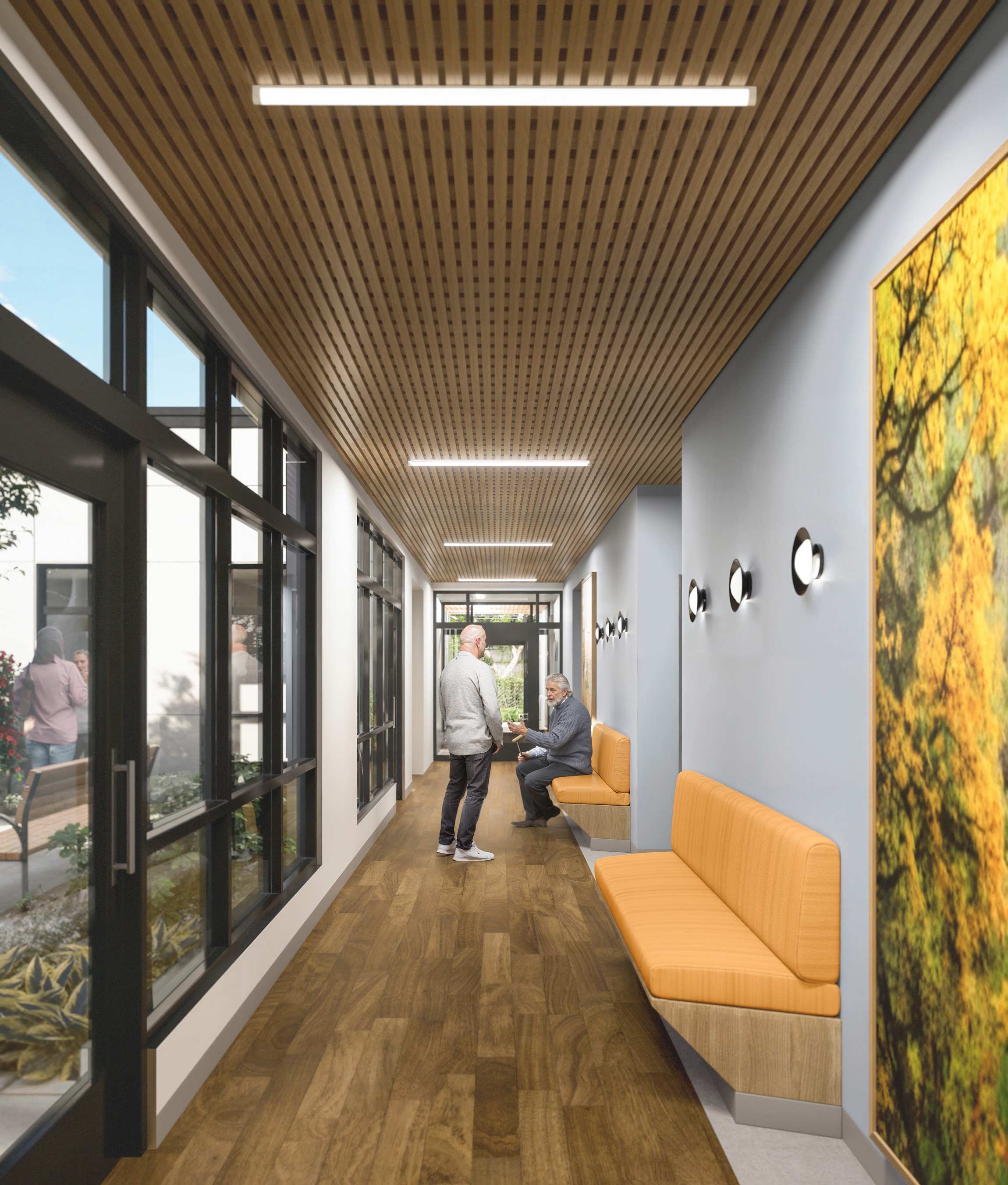
The interior materiality takes cues from the surrounding community context, with warm wood tones complemented by calming neutrals. The interior approach carefully considers acoustics and sensory sensitivities of those who come to the behavioral health facility, selecting materials and fixtures that mitigate harshness. Intuitive wayfinding is incorporated by using colors and graphics to allow ease of navigation throughout.
Acknowledgements
SEA Team
Sid Scott
Margaret Wilson
Kathy Johnson
Drew Dippel
Tim Gordon
Trent Jorgensen
Jenna Hays
Breanna Geiser
Project Team
TBD
Photography Credits
Renders by SEA
Similar Projects